MARTINI
The dry gin martini's origin is wrapped in the kind of murky glamour that suits a drink named after a dance move. Its roots stretch back to the mid 19th century with early gin and vermouth mixtures appearing in American cocktail books. Some stories credit sailors’ "Martinez" on the California Gold Rush trail as a close precursor, while others point to London’s evolving gin culture. By the early 20th century the martini had crystallised into a distinct cocktail, its name and form shifting regionally. Prohibition in the United States and the cocktail renaissance in Europe after World War I both propelled the martini’s mystique, turning it into a symbol of urbane sophistication, served in the long stemmed, inverted cone glass that became as iconic as the cocktail itself.
The classic dry gin martini is astonishingly simple. Good London dry gin and dry vermouth, a lemon twist or an olive, and occasionally a dash of orange bitters for nuance. "Dry" primarily refers to the reduced proportion of vermouth. Early recipes called for equal parts gin and vermouth, but through the 1920s–50s the trend moved toward ever drier mixes, culminating in the sparing glass rinse or even the legend of a martini made with "one drop" of vermouth. Its popularisation came via bars, celebrities and books, think 20th century hotel bars, wartime officers, and cocktail manuals, plus cinema and literature that cemented the martini’s status as the go to emblem of elegance, whether shaken or stirred (although I always believe it should be stirred).
MARTINI
〰️
MARTINI 〰️
(Classic Dry) Martini
Time: 5 minutes
Serves: 1 cocktail
60ml gin
10ml dry vermouth
(Optional) 2 dashes orange bitters
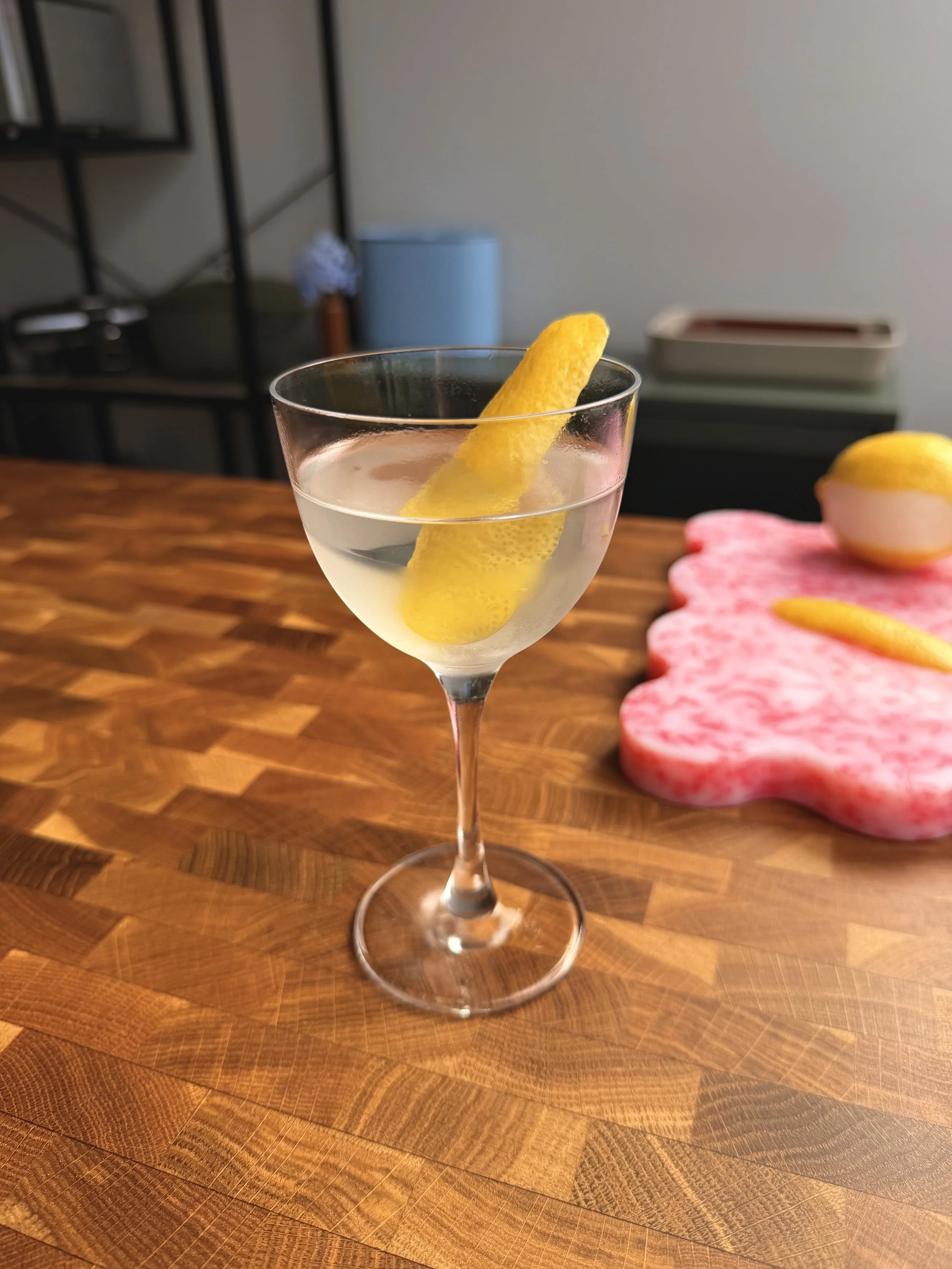
Garnish: lemon swath
*This is a classic dry style martini. For a bone dry style add the dry vermouth to the mixing glass and fill with ice, give it a few stirs to coat the ice and then discard the vermouth. For a wetter martini add more dry vermouth going up to 30mls for a 2:1 ratio or even adding 60ml vermouth for a 1:1 ratio and keep vermouth in the cocktail. A wetter style tastes less alcoholic and more herbaceous.
Place coupe/nick & nora glass in freezer to chill and frost over. I also like to add the mixing glass in for a couple minutes, because the key to a good martini is keeping everything as cold as possible.
In a chilled mixing glass add in all the gin, dry vermouth and orange bitter and fill with ice cubes to the top. Using a bar spoon, stir the cocktail until it frosts over (around 30 - 45seconds) and the mixing glass becomes very cold to the touch.
Using a julep strainer* strain the martini into the frosted coupe glass and then finish by squeezing the lemon swath over the martini so it catches all the oils, then rim the glass with the swath before dropping into the martini.